
Knowledge Base
GPTWeb + HubSpot: What You Can Do That a Pixel Can't
great question. The HubSpot pixel on a traditional website is essentially a one-way data collector — it tracks page visits, form fills, and basic behavioral data. GPTWeb's native HubSpot integration is a completely different category of capability. Here's what you get that a pixel simply cannot provide.
The HubSpot pixel pushes anonymous activity data to HubSpot. GPTWeb's CRM Sync is fully bidirectional — meaning data flows both ways. GPTWeb pushes rich engagement data to HubSpot, and when your sales team updates a contact in HubSpot (owner assignment, lifecycle stage, job title), those changes pull right back into GPTWeb to influence scoring and campaign targeting. The pixel can't do that.
When you connect HubSpot, GPTWeb automatically creates a "🚀 GPTWeb" property group in HubSpot with 21 custom fields. These are populated in real-time from every visitor conversation — no manual setup, no custom workflow building required.
| Field Type | Fields Created | What a Pixel Provides |
|---|---|---|
| Contact Fields (15) | AI Score, DQL Status, DQL Date, Visit Count, Conversation Count, First Seen, Last Seen, Engagement Score, Behavioral Score, Firmographic Score, Demographic Score, LLM Confidence, User Type, Is Customer, Customer Since | Page views, form fills, email opens only |
| Company Fields (6) | DQL Count, Avg Score, Total Visits, Total Conversations, Contact Count, Last Activity | Basic company association only |
When a visitor crosses your DQL threshold through conversation on your GPTWeb site, HubSpot is updated automatically — DQL status, DQL date, AI score, and conversation context all land in the contact record. Your sales team opens HubSpot and the lead is already qualified, enriched, and ready to work. No pixel in the world can qualify a lead from a conversation.
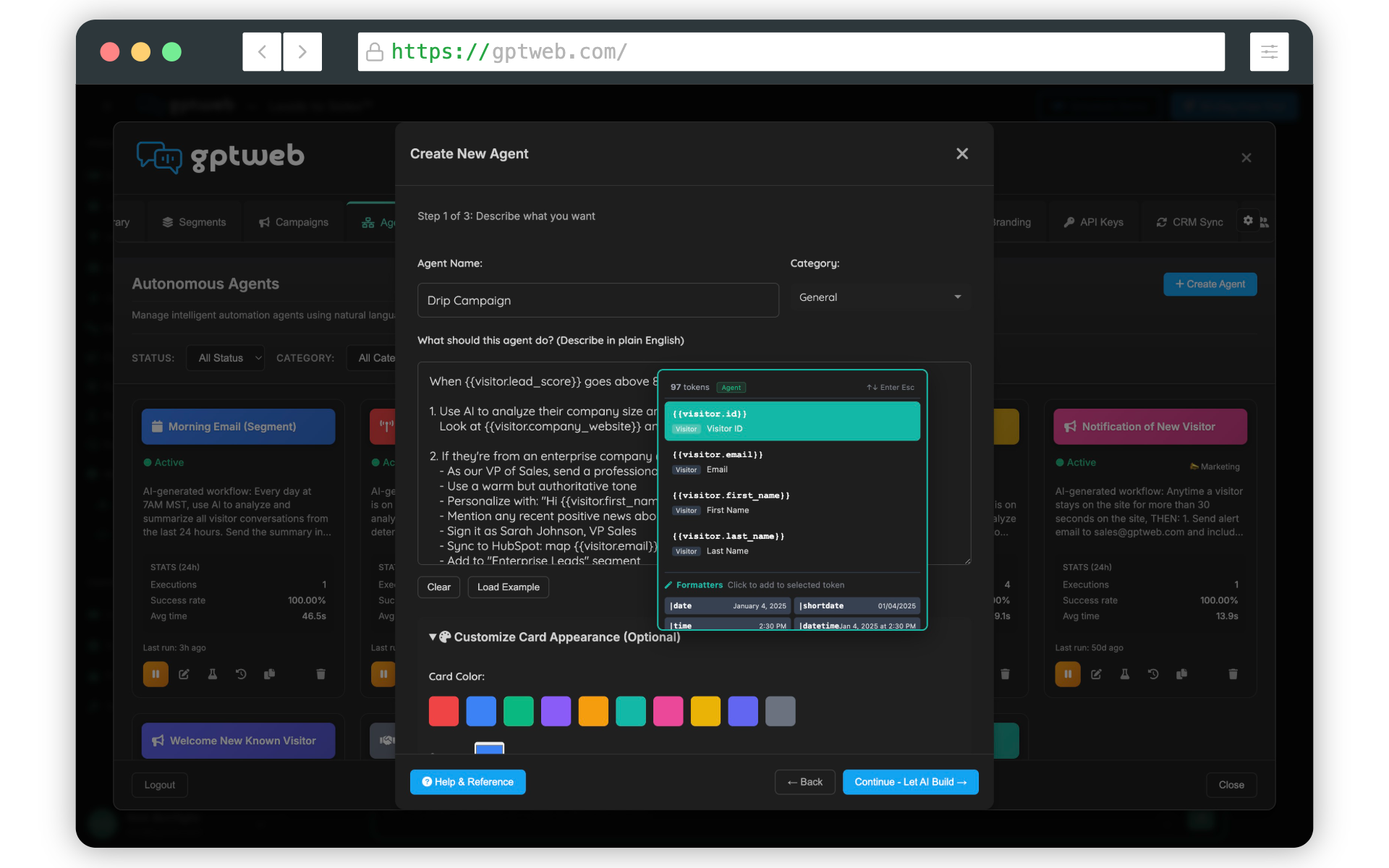
GPTWeb agents can trigger HubSpot-specific actions automatically when scoring thresholds are crossed or events occur — creating contacts, updating lifecycle stages, creating follow-up tasks, and syncing conversation transcripts. This is autonomous CRM automation, not passive tracking.
GPTWeb syncs aggregate account-level data to HubSpot Company objects — DQL count, average score across all visitors from that company, total visits, total conversations, and last activity date. This gives your sales team account-based intelligence that no pixel can derive. at your organization, where account-level data quality matters, this is a meaningful upgrade.
GPTWeb integrates natively with HubSpot Meetings — visitors can book time directly from the GPTWeb chat interface using your existing HubSpot Meetings setup. It auto-sends calendar invites using your existing HubSpot OAuth connection. No separate scheduling embed needed.
| Capability | HubSpot Pixel | GPTWeb CRM Sync |
|---|---|---|
| Page visit tracking | Yes | Yes |
| Form fill capture | Yes | Yes |
| Email open tracking | Yes | No (email is separate) |
| Bidirectional data sync | No | Yes |
| AI conversation scoring | No | Yes |
| DQL status sync | No | Yes |
| 15 custom contact fields | No | Yes |
| 6 custom company fields | No | Yes |
| Account-level scoring | No | Yes |
| Agent-triggered CRM actions | No | Yes |
| Conversation transcripts in CRM | No | Yes |
| HubSpot Meetings booking in chat | No | Yes |
| Real-time sync (every 5 min) | No | Yes |
| Match existing contacts by email | No | Yes |
The pixel tells you someone visited your pricing page. GPTWeb tells you who they are, what they asked, how interested they are, and whether they're ready to buy — all synchronized automatically into HubSpot so your sales team can act immediately. That's the difference between passive tracking and active pipeline intelligence. Learn more about CRM Sync, AI Scoring, and What are DQLs™? to get the full picture. GPTWeb is the future of engagement, websites, and marketing automation combined — built for the AI era, built for now.