
Knowledge Base
Intent-Triggered Campaigns: How GPTWeb Fires at the Right Moment
traditional marketing automation fires campaigns based on what pages someone visited. GPTWeb fires based on what someone actually says. Here is how it works:
- Conversation is the trigger: When a visitor asks about pricing, mentions a competitor, or discusses implementation timelines, GPTWeb's AI recognizes the intent signal and fires the appropriate campaign in real time, without waiting for a form fill or page threshold.
- In-context delivery: Campaigns surface inside the conversation itself, not as a separate email sequence days later. The response feels natural, relevant, and timely because it is tied directly to what the visitor just expressed.
- Agents act autonomously: Once intent is detected, agents can simultaneously trigger a campaign, create a CRM task, send a sales alert, and log the DQL score, all without human intervention.
- Progressive profiling layered in: Contextual forms appear within the conversation at exactly the right moment based on intent signals, making data capture feel natural rather than intrusive.
Intent-Triggered Campaign Flow
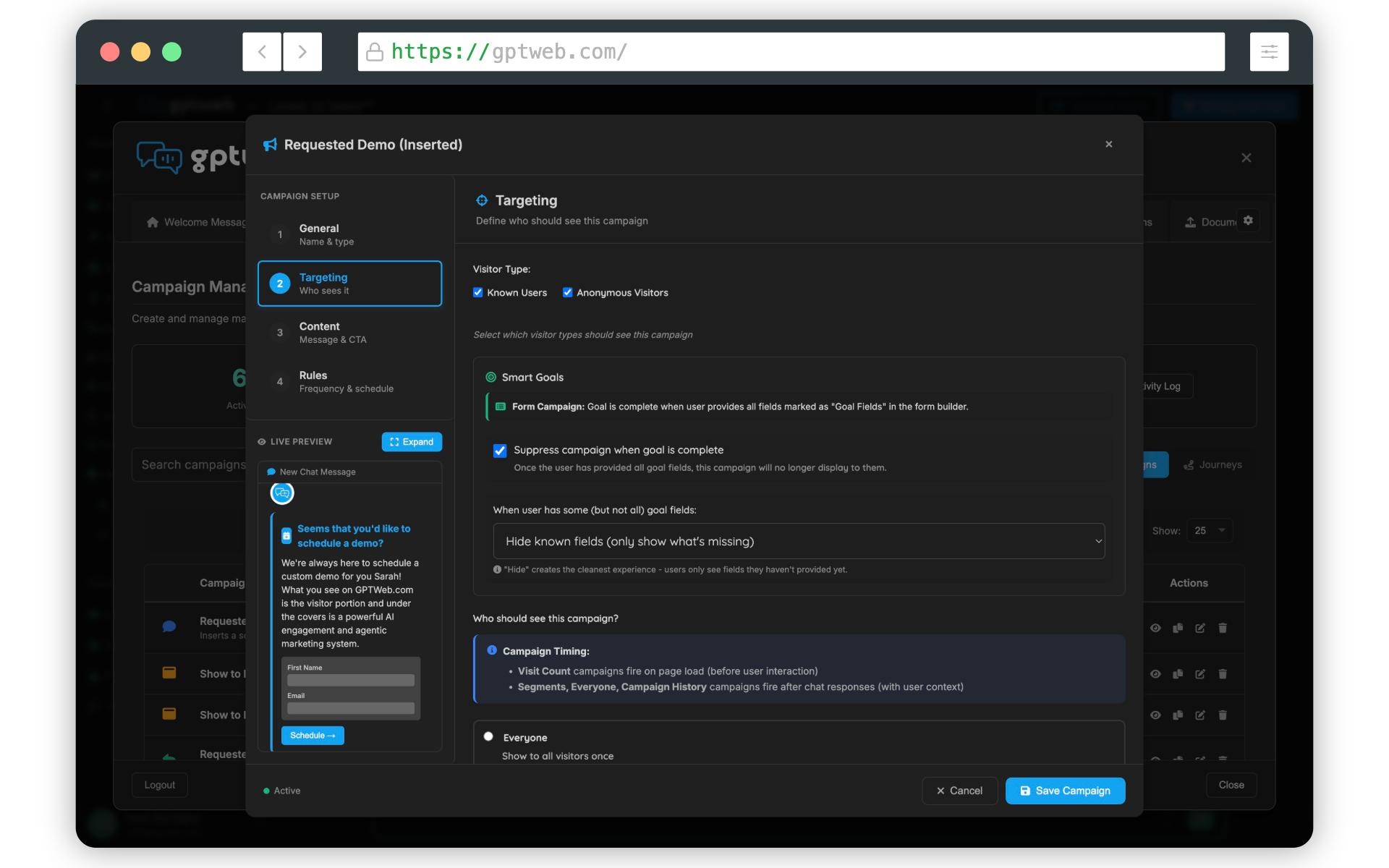
The core difference: Marketing Automation 1.0 asks 'what did they click?' GPTWeb asks 'what did they mean?' That shift from activity to intent is what makes campaigns actually convert.
GPTWeb is the future of engagement, websites, and marketing automation combined, built for the AI era, built for now.