Knowledge Base
Why a Conversational Website Outperforms a Traditional Website
Great question! The shift from traditional to conversational websites isn't just a cosmetic upgrade — it's a fundamental reimagining of how businesses and visitors interact. Here's why conversational websites win across every dimension that matters to marketing, sales, and revenue.
The Core Problem with Traditional Websites
Traditional websites were designed for a world where visitors were patient, menus were intuitive, and forms were acceptable. That world no longer exists. Today's visitor arrives with a specific question, spends less than 15 seconds deciding whether your site is worth their time, and leaves the moment they feel friction. Traditional websites force them to navigate menus, read static pages that may or may not answer their question, and fill out forms that feel intrusive and disruptive. The result? High bounce rates. Low engagement. Generic leads that sales teams ignore. Marketing budgets wasted on traffic that never converts. A conversational website flips this model entirely. Instead of forcing visitors to adapt to your information architecture, it adapts to them — answering their specific question, in their own words, instantly.
3-5x Higher
Engagement Rate
40-60% Lower
Bounce Rate
DQL vs MQL
Lead Quality
10x Faster
Time to Answer
5 Reasons Conversational Beats Traditional
Reason 1: Visitors Get Answers Instead of Searching
On a traditional website, a visitor looking for information about enterprise pricing has to find the right menu, navigate to the pricing page, parse through tiers, and hope their specific question is answered somewhere. If it isn't, they leave. On a GPTWeb conversational site, they simply ask: "What does enterprise pricing look like for a 500-person company?" and get an immediate, precise answer tailored to their question. No navigation. No searching. No friction. This isn't just a better experience — it's a fundamentally different relationship between visitor and brand. You're not a website they browse. You're a knowledgeable expert they talk to.
Reason 2: Intent-Based Qualification Replaces Form-Based Guessing
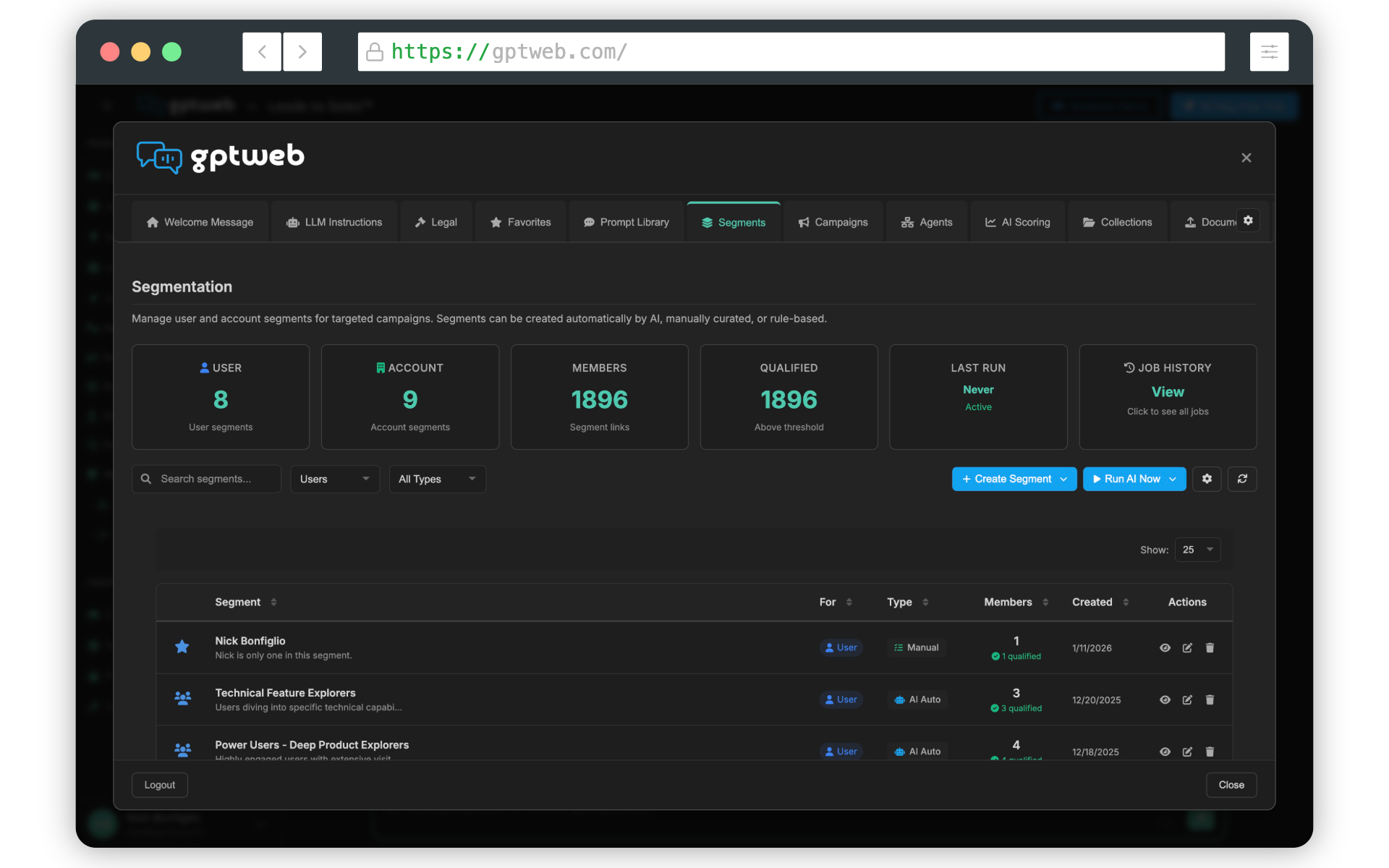
Traditional websites qualify leads through forms — interrupting visitors with requests for name, email, company, and phone number before they've decided whether you're worth their time. Form conversion rates hover at 2-5% for a reason: most visitors refuse to engage. GPTWeb's conversational approach captures qualification data naturally through dialogue. When a visitor asks "How does your platform handle Salesforce migration for a team switching from HubSpot?" — that single question reveals company context, technical sophistication, active evaluation, and competitive awareness. No form required. The AI Scoring Engine analyzes every message across four dimensions — engagement quality, behavioral signals, firmographic fit, and demographic authority — creating a Discussion Qualified Lead (DQL) automatically. These leads convert at 25-40% compared to the 2-5% typical of traditional form-generated MQLs.
Reason 3: Forms Appear Contextually, Not Interruptively
Traditional websites use forms as gatekeepers — pop-ups that interrupt browsing, landing pages that demand information before delivering value, and contact forms that feel like cold calls. GPTWeb uses forms contextually — surfacing them within conversation at exactly the right moment based on intent signals. When a visitor's questions reveal they're actively evaluating solutions, a form appears naturally as the next logical step in the conversation. Progressive profiling ensures you never ask for information you already have, and never ask for too much at once. This is the difference between a form that feels like an interruption and a form that feels like a natural next step.
Reason 4: Every Conversation Becomes SEO Content
Traditional websites require manual content creation to drive SEO. Teams research keywords, write articles, publish pages, and wait months to see results. The content goes stale. The cycle repeats. The cost compounds. GPTWeb's Conversational SEO™ automatically generates search-optimized static pages from your most popular AI conversations. Your visitors create the content that attracts more visitors. The more people use your conversational site, the more SEO content gets generated — organically, automatically, at no additional cost. The SEO loop is powerful: visitors find your content through search engines, click through to an interactive AI chat with their question pre-filled, engage in a conversation, and that conversation generates more SEO content. Traditional websites can't compete with this compounding growth engine. Search engines and AI crawlers alike discover and index your knowledge, driving organic traffic continuously without a content team working overtime.
Reason 5: Autonomous Action Replaces Manual Follow-Up
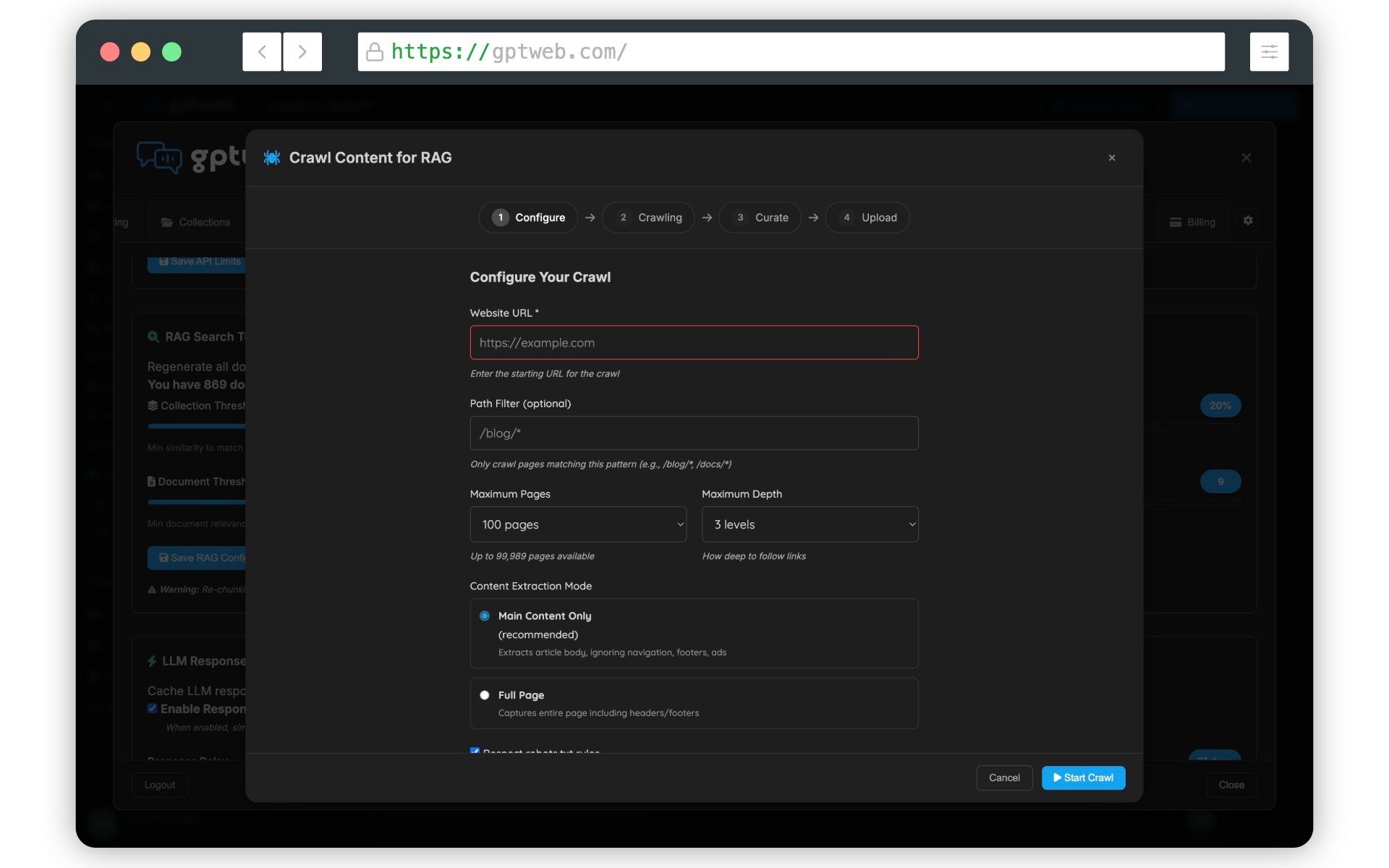
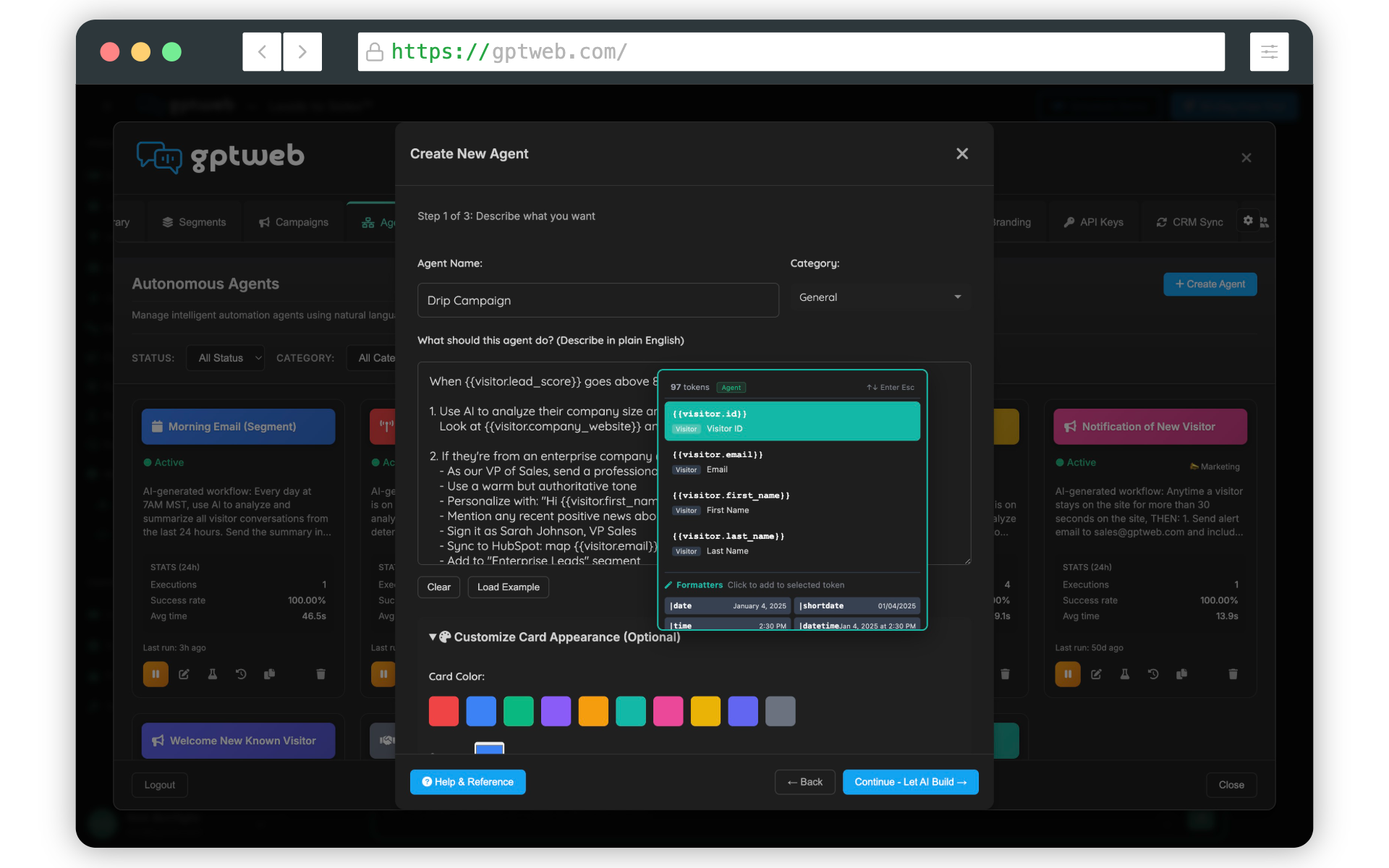
Traditional websites collect passive data. Someone downloads a whitepaper, gets added to a drip campaign, and receives generic emails for six weeks. The signal is weak. The follow-up is generic. The conversion is unlikely. GPTWeb's Agent Engine responds to conversational signals with autonomous action. When a visitor's conversation crosses the DQL threshold, agents automatically update your CRM, notify the sales team with a full conversation summary, trigger personalized email sequences, and create follow-up tasks — all without human intervention. Your sales team doesn't receive a lead who downloaded a PDF. They receive a lead who asked about enterprise security, mentioned a Q3 implementation timeline, and compared you favorably to a competitor — with the full conversation attached.
Side-by-Side Comparison
Traditional Website vs GPTWeb Conversational Website
| Dimension | Traditional Website | GPTWeb Conversational Website |
|---|---|---|
| Visitor Experience | Navigate menus, read static pages, fill forms | Ask questions, get instant personalized answers |
| Lead Capture | Interruptive pop-up forms at 2-5% conversion | Contextual progressive profiling at 25-40% conversion |
| Lead Quality | MQLs based on clicks and page views | DQLs based on conversation quality and intent |
| Qualification Speed | Days to weeks via manual SDR calls | Real-time AI scoring during conversation |
| Content Growth | Manual writing, goes stale, expensive | Auto-generated Conversational SEO™, compounds with usage |
| Sales Follow-Up | Generic email after form fill | Full conversation context delivered to CRM automatically |
| Personalization | Static merge tags (first name, company) | Dynamic AI responses based on specific questions asked |
| Bounce Rate | 45-65% average | 20-35% with conversational engagement |
| 24/7 Availability | Static content only | AI-powered discovery call with every visitor |
| SEO Strategy | Manual keyword research and writing | Auto-generated from real visitor questions |
| Form Strategy | Gating content before delivering value | Contextual forms triggered by intent signals |
| Automation | Rigid workflows requiring technical setup | NLP agents described in plain English |
| Data Capture | What visitors click | What visitors think and need |
| Revenue Impact | Long sales cycles, poor forecast accuracy | Shorter cycles, DQL-to-close correlation measurable |
The Conversational Advantage: Visitor Journey Comparison
The Bottom Line for Organizations Like your organization
the question isn't really "why is conversational more effective than traditional" — the question is "why would you keep sending your best prospects to a static brochure when you could give them a discovery call that never sleeps?" Traditional websites were built for a world of patient browsers. Today's buyers are impatient, informed, and allergic to friction. They want answers, not navigation. They want dialogue, not forms. They want to be understood, not tracked. GPTWeb is built for that world. Every visitor gets a personalized, intelligent experience. Every conversation generates qualification data. Every interaction feeds an AI that gets smarter about your visitors over time. And every popular question becomes SEO content that drives more visitors to have more conversations. That's the compounding advantage of a conversational website — and it starts from the moment you go live.
GPTWeb is the future of engagement, websites and marketing automation combined — built for the AI era, built for now.